
Most homeowners never think about restoration companies until a pipe bursts or a fire damages their kitchen. Social media is one of the few channels that keeps your name in front of them before that moment happens.
Social media marketing for restoration companies works differently than it does for retail or hospitality brands. The goal is not viral content; it is steady proof that a real, capable team stands behind your name when someone eventually needs help.
This article covers which platforms make sense for restoration companies, the types of content that perform well, how to build a sustainable posting routine, and the mistakes that waste time without building trust. We will also cover how to measure whether the effort is paying off.
Getting this right does not require a large team or a constant stream of new ideas. It requires a consistent system for turning the work you are already doing into content people trust.
Why Social Media Matters for Restoration Company Marketing
Restoration is a high-trust, infrequent-purchase business. Most people will hire a restoration company once every several years, if ever, which means brand familiarity built well before the emergency plays a real role in who gets the call.
Social media also supports the rest of your marketing. Prospects who find you through a Google search, a referral, or a Google Business Profile often check your social pages before calling, looking for recent activity, real reviews, and evidence that you are an active, established business rather than a name on a truck.
This ties directly into the broader lead generation approach RMG has outlined for restoration companies, where social channels function as one “fishing pole” among several, working alongside Google Business Profile, SEO, and paid search rather than replacing them.
Choosing the Right Platforms
Not every platform deserves equal attention. Most restoration companies see the strongest return from a focused approach rather than spreading thin across every network.
- Facebook: Still the most reliable platform for local trust-building, community groups, and reaching homeowners directly.
- Instagram: Effective for before-and-after project photos, team culture, and short video content.
- YouTube or YouTube Shorts: Useful for longer explainer content, project walkthroughs, and repurposed video clips.
- LinkedIn: Valuable for reaching insurance adjusters, property managers, and commercial referral partners rather than homeowners directly.
Pick one or two primary platforms and commit to consistency there before expanding, rather than posting sporadically across five accounts.
Content That Performs Well for Restoration Companies
Before-and-After Project Photos and Video
This remains the single most effective content type for restoration companies. Real transformations, with the customer’s permission, demonstrate capability far more convincingly than any written claim.
Behind-the-Scenes and Team Content
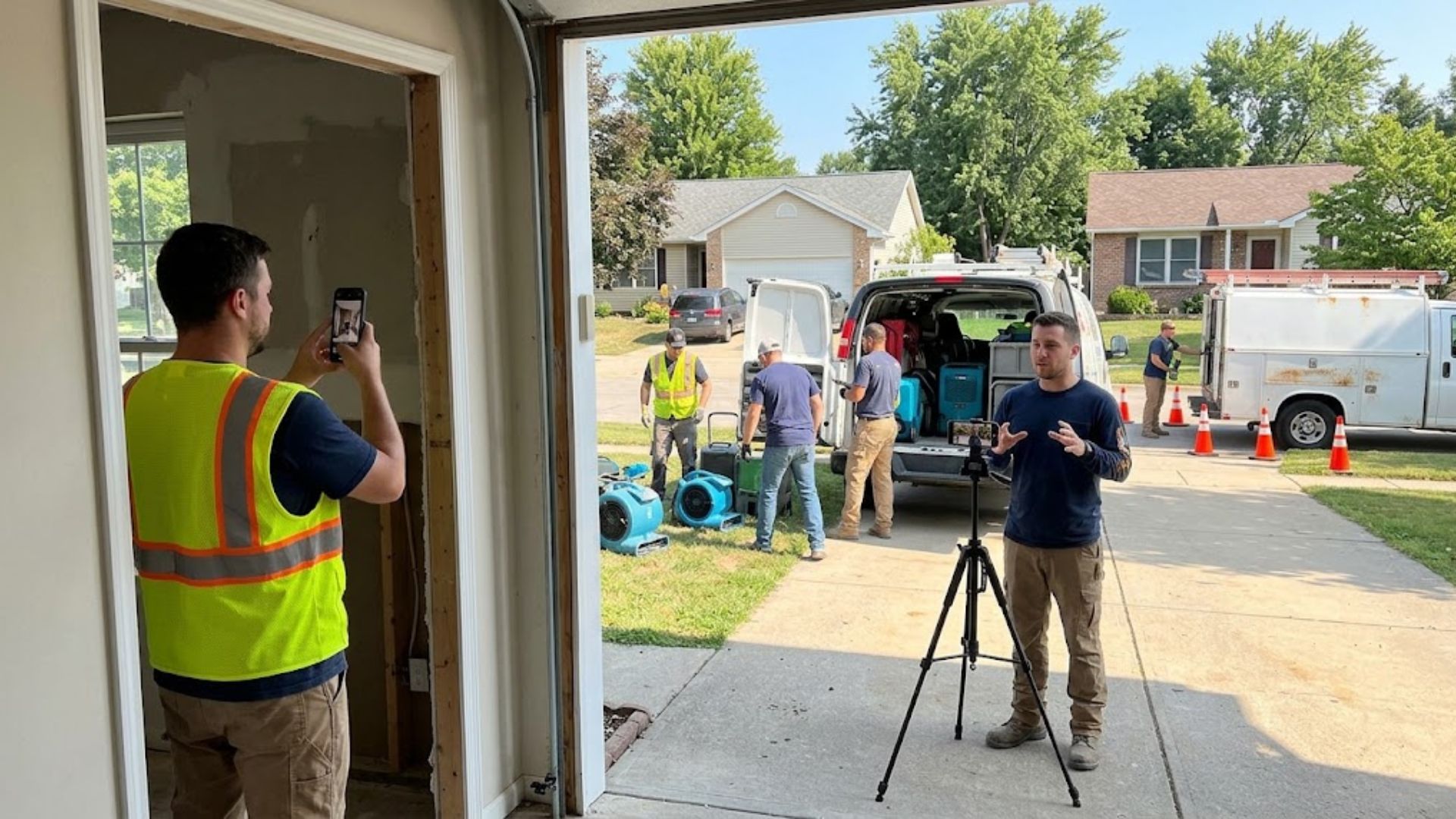
Showing the people behind the trucks, including technicians, project managers, and office staff, humanizes a business that customers often meet during a stressful moment. It also supports hiring and retention when potential employees see the culture in action.
Educational and Safety Content
Short posts explaining what to do in the first hour after water damage, why mold spreads quickly, or how to spot early fire damage signs position your company as the knowledgeable option, not just an available one.
Review and Testimonial Highlights
Turning a strong Google or Facebook review into a simple graphic or short video gives your best proof points a second life across your social channels.
Community Involvement
Sponsorships, local events, and charitable work reinforce that your company is a genuine part of the community, which matters in a business built on trust.
Building a Sustainable Posting Routine
Consistency matters more than volume. A realistic cadence for most restoration companies looks like:
- Two to four posts per week on your primary platform
- One piece of “pillar” content per month, such as a longer video or project story
- A batch content-creation session, where several weeks of posts are planned and captured at once
- A simple content calendar tracking what has been posted and what is upcoming
Repurposing helps stretch limited time further. A single project video or podcast episode can become a long-form post, several short clips, a review-request follow-up, and a Google Business Profile update, which mirrors the kind of content workflow RMG has described using AI tools to turn long-form video into social clips, GBP posts, and review responses more efficiently.
Common Social Media Mistakes Restoration Companies Make
- Posting inconsistently, then abandoning the account for months
- Sharing only promotional content with no educational or behind-the-scenes mix
- Ignoring comments and messages, which signals an inactive or unresponsive business
- Using stock imagery instead of real project and team photos
- Posting before-and-after content without customer permission
How to Measure Whether Social Media Is Working
Social media results for restoration companies are rarely about follower count alone. Track:
- Engagement rate: comments, shares, and saves relative to reach
- Direct messages and comments that turn into calls or leads
- Website traffic referred from social platforms
- Growth in branded search, which often reflects rising familiarity with your name
- Review volume and sentiment, since active social presence often correlates with more reviews
Set a simple monthly review of these numbers rather than judging individual posts in isolation.
When to Bring In a Specialist
A restoration company owner already managing crews, estimates, and staffing rarely has time left for a disciplined content calendar. That is where a dedicated marketing partner earns its place.
At Restoration Marketing Group, social media is one part of a broader system built for damage restoration contractors specifically, working alongside our Google Business Profile management and reputation management services so your online presence reinforces the same message everywhere a prospect looks.
Frequently Asked Questions
How often should a restoration company post on social media?
Two to four posts per week on one primary platform is a realistic, sustainable starting point for most restoration companies. Consistency over months matters far more than a short burst of daily posting.
Which social media platform works best for restoration companies?
Facebook and Instagram typically perform best for homeowner-facing restoration marketing, while LinkedIn suits commercial and insurance referral relationships. The right mix depends on whether your leads lean residential, commercial, or both.
Can social media replace SEO or paid advertising for restoration companies?
No, social media works best alongside SEO, Google Business Profile, and paid search rather than replacing them. It builds familiarity and trust that support conversions from other channels.
Do restoration companies need permission to post before-and-after photos?
Yes, always get explicit customer permission before posting project photos, especially any that show a customer’s home or personal property. This protects customer privacy and your company’s reputation.
How do I get more engagement on restoration company social posts?
Real project photos, team faces, and genuine customer reviews consistently outperform generic or stock content. Responding promptly to comments and messages also signals an active, trustworthy business.
Turning Consistency Into Trust
Social media marketing for restoration companies is less about creativity and more about consistency: real project content, genuine team presence, and a steady posting rhythm that keeps your name visible long before an emergency happens.
A simple next step is to audit your last ten posts and ask whether a stranger would trust your company based on them alone.
If building and maintaining that consistency is more than your team has time for, Restoration Marketing Group works exclusively with damage restoration companies to keep social media, reviews, and Google Business Profile activity working together as one system.
Recent Comments