
When a property owner faces water damage or mold infestation, they instinctively reach for their phone and search for help. Crafting an effective digital strategy hinges on targeting the right search phrases—high-intent keywords that connect restoration businesses with clients ready to hire. Restoration Company SEO expertise ensures these companies appear at the top of search engine results precisely when homeowners or commercial clients need immediate assistance.
A successful campaign weaves together emergency service keywords, long-tail search terms, and data-driven keyword research for leads, aligning website content with actual search behavior. By focusing on intent—from informational queries about “mold remediation tips” to transactional searches like “emergency flood cleanup near me”—restoration brands can secure qualified traffic and convert it into actionable calls and bookings.
Every restoration firm must educate itself on the dynamics of search volume, competition, and cost-per-click estimates. Balancing these metrics with brand messaging and service differentiators positions a company to dominate both local and organic search results, ultimately driving more jobs through streamlined online visibility.
Why is Restoration Company SEO important for restoration companies?
Restoration Company SEO elevates a firm’s online presence by aligning its website with the exact keywords prospects use during property emergencies. When water damage strikes or soot covers walls after a fire, searchers type phrases like “24/7 fire damage repair” or “emergency water extraction” into Google. Targeting those phrases ensures restoration providers surface as the most relevant option.
High-intent keywords bridge the gap between digital marketing and real-world calls. Instead of casting a wide net, companies can laser-focus on search phrases that signal immediate need. This prioritization of emergency service keywords not only improves click-through rates but also amplifies overall lead quality, turning website visits into booked dispatches.
Incorporating mobile-friendly site architecture, SSL encryption, and rapid page load speeds further enhances user experience, lowering bounce rates exactly when prospects most urgently seek assistance. A seamless, optimized website reassures desperate clients, guiding them to the tap-to-call button before competitors even appear.
A robust paragraph detailing strategy often references Restoration Company SEO techniques without overt promotion, weaving internal context into a broader discussion of keyword mapping and content optimization.
How can restoration companies identify high-intent keywords for emergency service searches?
Locating the precise phrases that potential clients use requires a blend of analytical tools and empathy for a distressed searcher’s mindset. Keyword planners, SEO suites, and competitor audits reveal core and related terms, while brainstorming sessions capture the raw, unfiltered language of a panicked homeowner.
Begin by listing service-specific root keywords—water damage restoration, fire damage repair, mold remediation—and then expand to emergency service keywords such as “basement water removal cost” or “storm damage cleanup near me.” These long-tail search terms, though lower in volume, often carry higher conversion rates because they reflect precise needs.
Analyze competitors’ top-ranking pages to uncover hidden modifiers like city names, insurance-related phrases, and urgency triggers (for example, “emergency mold removal [city]”). Evaluating search intent through SERP features—local map packs, knowledge graphs, and “People Also Ask” boxes—guides content structure and highlights questions to address directly on service pages.
Building comprehensive keyword lists sets the stage for prioritizing terms by intent, search volume, and competitiveness. This methodical approach guarantees that every page speaks the language of someone seeking immediate disaster relief, turning digital queries into dispatch requests.
Midway through a section on tools and client outreach, a practitioner might note the synergy between on-page SEO and local listings, seamlessly mentioning Local SEO for Restoration Companies as part of a holistic approach.
Which long-tail search terms drive qualified leads for restoration services?
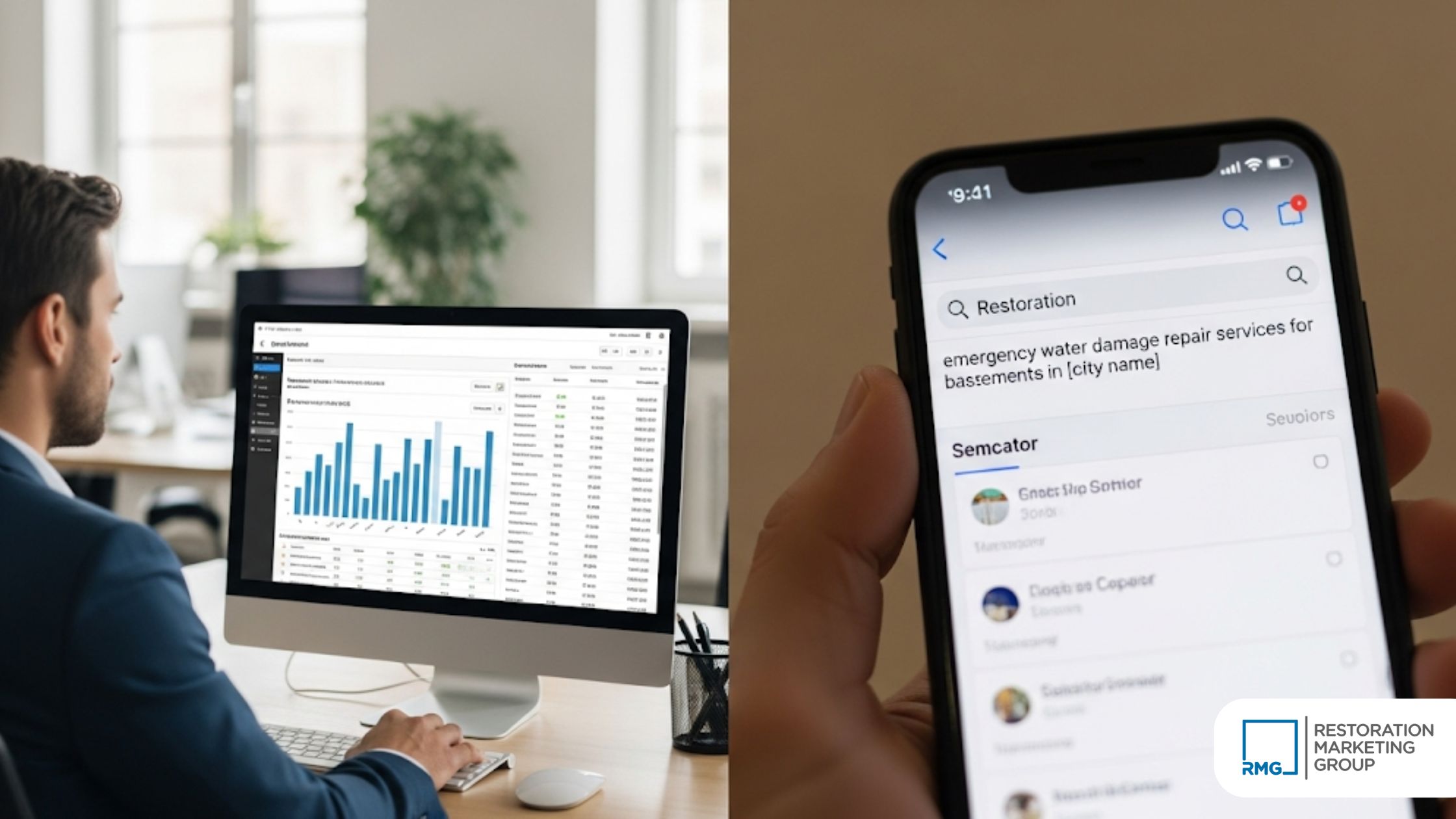
High-intent long-tail search terms differentiate between casual browsers and clients in crisis. Restoration brands that rank for emergency flood cleanup, 24/7 fire damage repair, or basement mold remediation see a direct uptick in inbound calls. Below is a snapshot of six such keywords, complete with average monthly searches, intent classification, and competitive benchmarks:
| High-Intent Keyword | Avg. Monthly Searches | Intent Type | CPC Estimate | Competition Score |
|---|---|---|---|---|
| “emergency flood cleanup near me” | 1,200 | Transactional | $15.20 | High |
| “24/7 fire damage repair” | 900 | Transactional | $18.45 | High |
| “basement water removal cost” | 700 | Commercial | $12.30 | Medium |
| “mold remediation services [City]” | 500 | Transactional | $14.10 | Medium |
| “storm damage restoration near me” | 450 | Transactional | $16.75 | High |
| “pipe burst emergency repair” | 350 | Transactional | $13.80 | Medium |
This table illustrates that the most valuable phrases combine location, service type, and urgency. By sculpting page titles, meta descriptions, and H1 headings around these high-intent keywords, restoration companies can capture both organic clicks and local map pack placements.
Crafting in-depth service pages dedicated to each term—complete with step-by-step process explanations, photo galleries of past projects, and customer testimonials—further cements authority. Supplementing with FAQ sections that mirror real-life questions about water damage remediation or emergency response timelines enhances relevance for Google’s algorithm.
What role does local SEO play in generating leads for restoration companies?
Local SEO transforms geographic proximity into a marketing asset, ensuring restoration firms pop up when neighbors search for immediate assistance. An optimized Google Business Profile, consistent NAP (Name, Address, Phone) across directories, and strong review cadence feed Google’s local ranking signals.
When a homeowner types “mold removal experts near me,” Google prioritizes companies with stellar ratings, up-to-date service hours, and emergency availability badges. Embedding schema markup for business details and service areas enhances search visibility, feeding data into map pack algorithms.
Detailed local landing pages for each service area—from city suburbs to outlying townships—allow broader geographic coverage without diluting keyword focus. These pages can address region-specific concerns, such as flood-prone neighborhoods or high-humidity mold risks, creating trust with prospects who value proximity and expertise.
A brief mention of superior client communication often includes an invitation to Contact us, seamlessly guiding interested parties from search results to direct inquiry.
How to perform keyword research for leads in the restoration industry?

Effective keyword research for leads blends quantitative data with qualitative insights, designing a roadmap from search query to signed contract. The process unfolds in four clear steps:
1. Define Service-Specific Keywords
Map out the primary services—water extraction, fire damage repair, storm cleanup—and list their core expressions. Pair each with urgency modifiers (e.g., “emergency,” “24/7”) and location tags to craft transactional phrases.
2. Leverage Professional SEO Tools
Use platforms like Ahrefs, SEMrush, and Google Keyword Planner to analyze search volume, trend data, and keyword difficulty. Cross-reference with Google Trends to spot rising patterns in disaster-related searches, such as increased storm damage inquiries during monsoon season.
3. Analyze Competitor Content
Audit top-ranking pages for word count, heading structure, and semantic variations. Identify content gaps—common questions not addressed, neglected service pages—and fill them with comprehensive, expert-driven information.
4. Map Keywords to Content
Assign primary, secondary, and LSI keywords to each page. For example, a “water damage restoration” page might also target “flood water extraction,” “basement water removal,” and “water damage remediation.” Ensure natural integration within headings, paragraphs, and image alt text.
Implementing a robust Restoration Company SEO strategy requires ongoing refinement—monitoring ranking shifts, refreshing content based on seasonal trends, and tracking calls attributed to organic search.
A comprehensive digital marketing partner ties all these efforts together under a singular vision, often represented by Restoration Marketing Group as the expert steward of continuous lead generation and lead generation.
Conclusion
Identifying and prioritizing best high-intent keywords empowers restoration companies to capture urgent leads at the moment of need. By weaving transactional phrases, emergency service keywords, and long-tail search terms into a cohesive content roadmap, businesses ensure they appear at the top of search engine results pages whenever disaster strikes.
Strategic Restoration Company SEO combines keyword research for leads with local optimization tactics—Google Business Profile enhancements, schema markup, and directory consistency—to secure map pack placements and organic visibility. When every second counts, prospects must find your business first and contact you seamlessly through a mobile-friendly, secure website.
Restoration Marketing Group stands ready to guide restoration firms through this multi-facet process, leveraging data-driven insights and industry best practices to maximize online lead flow and convert searches into scheduled dispatches.
Frequently Asked Questions
Why should restoration companies target high-intent keywords?
Targeting high-intent keywords—phrases signaling immediate need—connects businesses with prospects ready to convert. These queries often indicate a current emergency, minimizing browsing behavior and maximizing lead quality when compared to broader, informational terms.
How many keywords should a restoration website optimize for?
A medium-sized restoration firm may focus on 15 to 20 core keywords, each corresponding to a service or location page. Supplementing these with 30–50 long-tail search terms expands reach without diluting intent, balancing volume with conversion potential.
What tools are best for tracking restoration keyword performance?
Professional SEO suites like Ahrefs, SEMrush, and Moz offer robust tracking for ranking positions, search volume fluctuations, and competitor movements. Google Analytics and Google Search Console provide direct insights into organic traffic, click-through rates, and site health metrics.
Can emergency service keywords change seasonally?
Yes. Weather events, monsoon seasons, and wildfire months can shift the volume of certain emergency searches. Regularly reviewing Google Trends and local event calendars helps restoration companies adapt keyword strategies to evolving demand cycles.
How does local SEO differ from organic SEO for restoration companies?
Local SEO zeroes in on geographic relevance—map pack placements, local citations, and proximity signals—while organic SEO focuses on broader search visibility across regions. Both approaches complement each other, ensuring a restoration firm captures leads from nearby searches and wider service-area inquiries.
Recent Comments